
The Technology-Business Gap: A Guide for SaaS CEOs & CTOs


The Technology-Business Gap: A Guide for SaaS CEOs & CTOs
If you're the CEO or CTO of a tech heavy business, it is difficult to accept that the technology delivery is lacking. Technology is so critical in SaaS businesses, and the amount of money sunk into it is so large, that it is difficult to accept that, often, a very large impact and sum of money are wasted in inefficiencies. It is often easier to accept the status quo and think that you either don't have a problem or that the problem isn't worth fixing. After all, things aren't that bad. The product is evolving... slowly.
We've been helping many customers bridge the gap between technology and business and we noticed they all go through the same cycle: Ignorance, Denial, Realisation, Actions and finally Serenity. We've seen it so many times that we wanted to share some insights which hopefully can help you get a better grasp on things.
Most of our customers go through the following phases, and we engage at various stages, but in every case, we would have been more efficient more quickly if we had been engaged sooner, and the quicker we started to evaluate and tackle the problem.
Interestingly, we spoke to 50 CEOs of Saas businesses and all said the same thing: the gap between business and technology exists and is a real challenge. However, 80% of that audience believed that their own business did not have such an issue, only everyone else did. This is the Ignorance stage.
The Five Stages
1. Ignorance — "I don't know I have a problem" Without deep technical visibility, it's easy to mistake slow progress for normal. The product is evolving... just slowly.
2. Denial — "I know, but it's not worth fixing" The most difficult stage. Admitting something has gone wrong feels costly and uncomfortable. In reality, the ROI on fixing it is usually very fast — the added value almost always outweighs the cost of remediation.
3. Realisation — "Yes, this needs fixing"
4. Action — "Here's what I'm going to do about it"
5. Serenity — "Technology is under control, and the business is thriving" Delivery is faster, product/market fit improves, and the roadmap is fully owned by the business.
The sooner you can identify which stage you're in, the sooner you can act — and the greater the impact.
Diagnostic Questions
Answer honestly. The more "no" or "unsure" answers, the wider your gap.
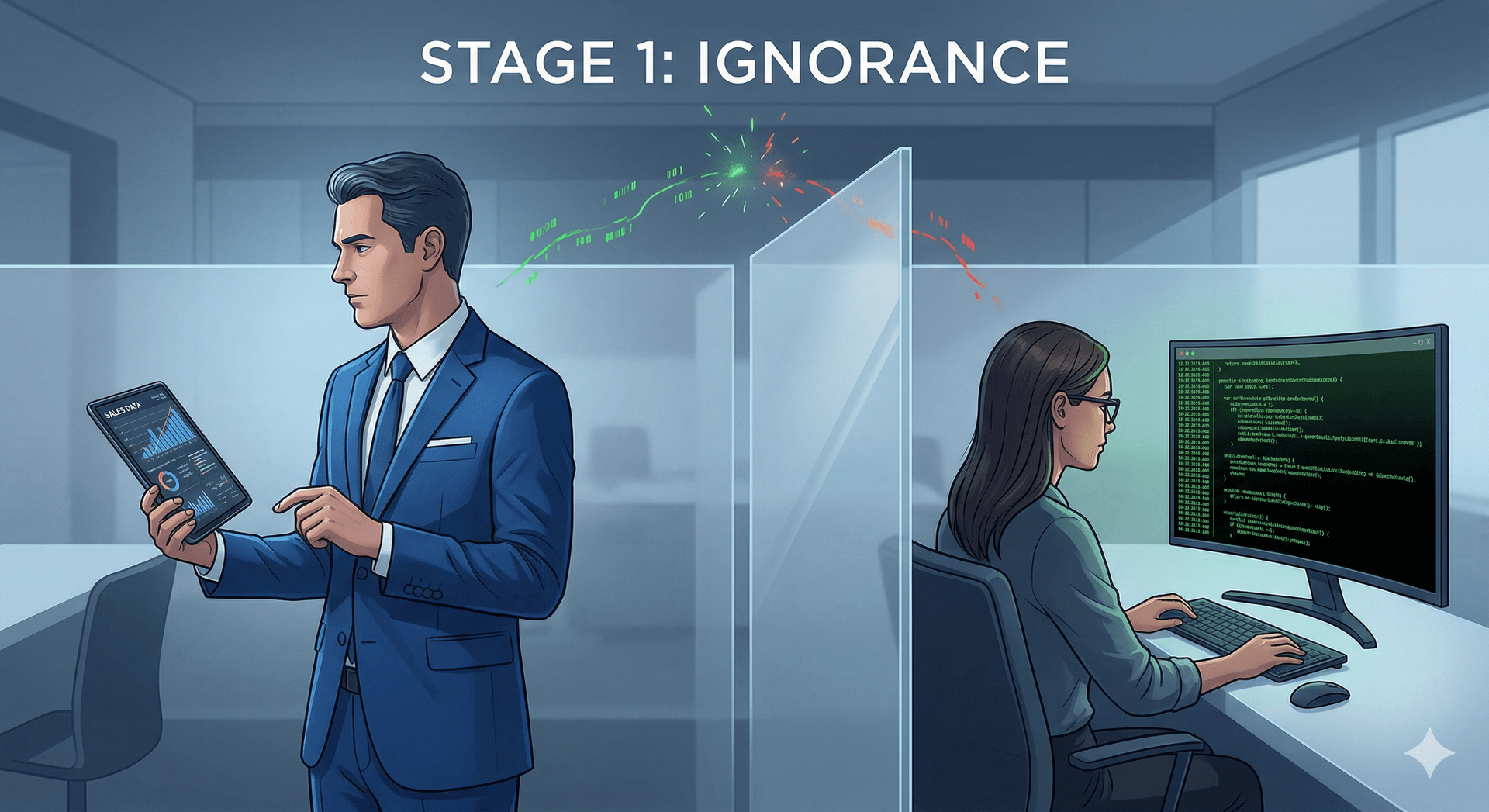
Stage 1 — Ignorance: Do I even have a problem?
Software Delivery
- Do you know what each person in your tech team is working on right now?
- Does each task clearly align with a business KPI?
- Has every active task been approved by the business, directly or as part of a project?
- What are the current bottlenecks for feature delivery?
- What are the current bottlenecks for scale and performance?
- How is security approached within the software?
Product Delivery
- Do new versions ship on a regular, predictable cadence?
- Do you clearly understand what the next two releases will deliver?
- Are the features being worked on truly the most valuable to the business right now?
Sales Alignment
- Is the sales team aligned with the product features in development?
- Are customer sign-ups being hindered by missing features?
- Does the sales team have what they need — demo environments, product collateral, etc.?
Overall Business
- How often is technology discussed in board meetings?
- How much friction does your product generate with customers?
- How efficient are you compared to your competitors?
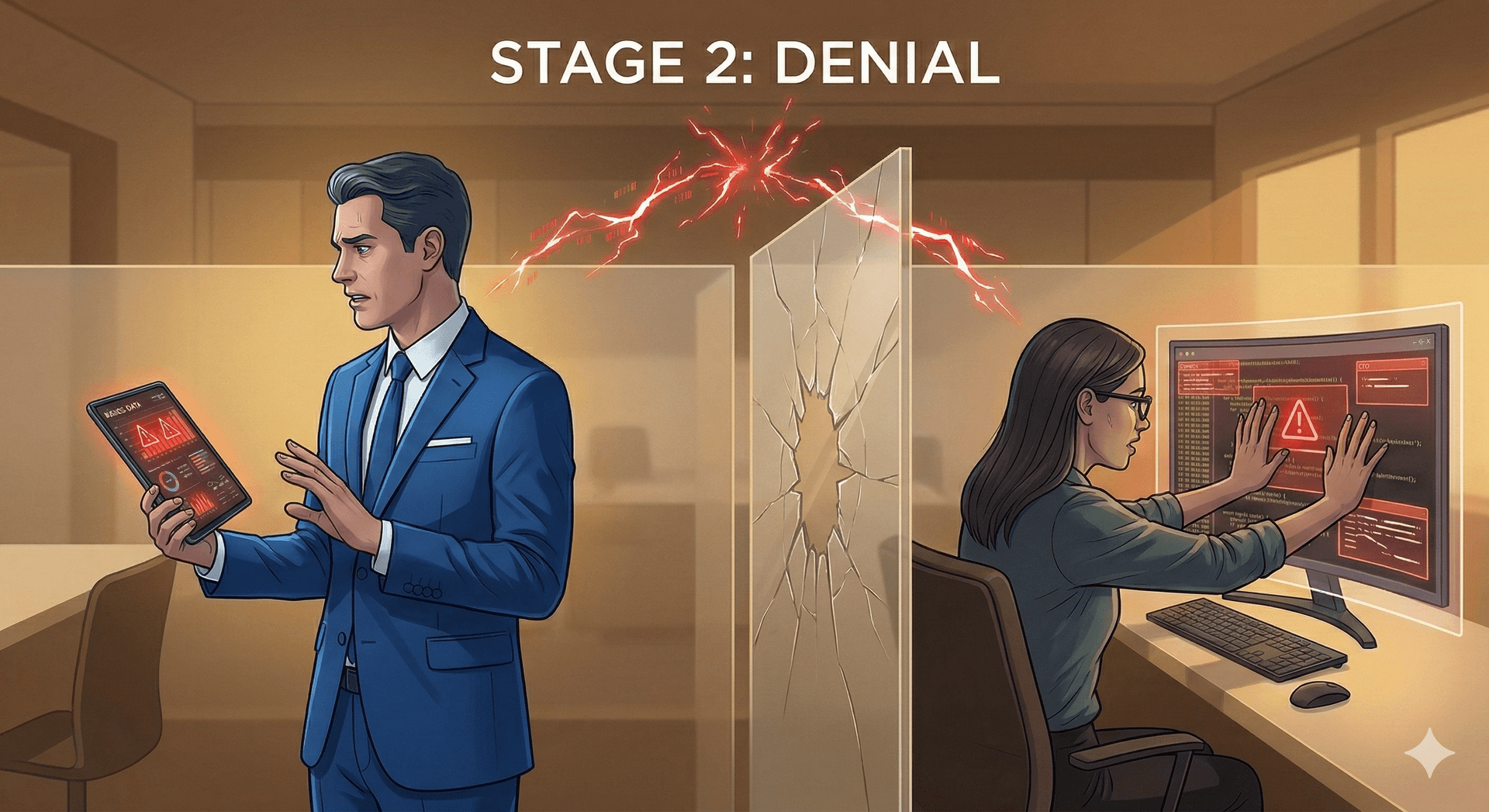
Stage 2 — Denial: Is it worth fixing?
Software Delivery
- Do more than 95% of tech tasks clearly align with business priorities?
- Do you understand the ROI in monetary terms for each task being worked on?
- Is your waste ratio below 10%?
- When did you last run performance testing — and did results improve or deteriorate?
- Based on current growth, when will your software break under load?
- How regularly do you pen test? How quickly do you act on findings?
Product Delivery
- Do 90% of releases ship on time?
- Do 90% of releases ship with the expected features?
- Is your release cycle waste below 10% (measured in days against your release cycle)?
Sales Alignment
- What is your customer attrition rate, and what does it cost you annually?
- How many support tickets does each customer generate?
- What does it cost to close a support ticket?
- Is the overall cost of signing and supporting a customer going up or down?
Overall Business
- What would it mean for your business to ship 30% slower than competitors?
- Most SaaS businesses release every 1.5 months with 2–3 key features. A 30% slowdown means roughly 2 fewer releases and 4–6 fewer key features per year. Over three years, that gap becomes almost impossible to recover from.
- What is your total tech waste in monetary terms?
- What is your product shipment waste in monetary terms?
- How many additional features could you ship per release if waste reduced by just 20%?
- Tech refactoring is healthy, but it must not crowd out competitive feature delivery.
- What is your refactoring cost as a percentage of total spend — and are there faster, cheaper ways to address it?
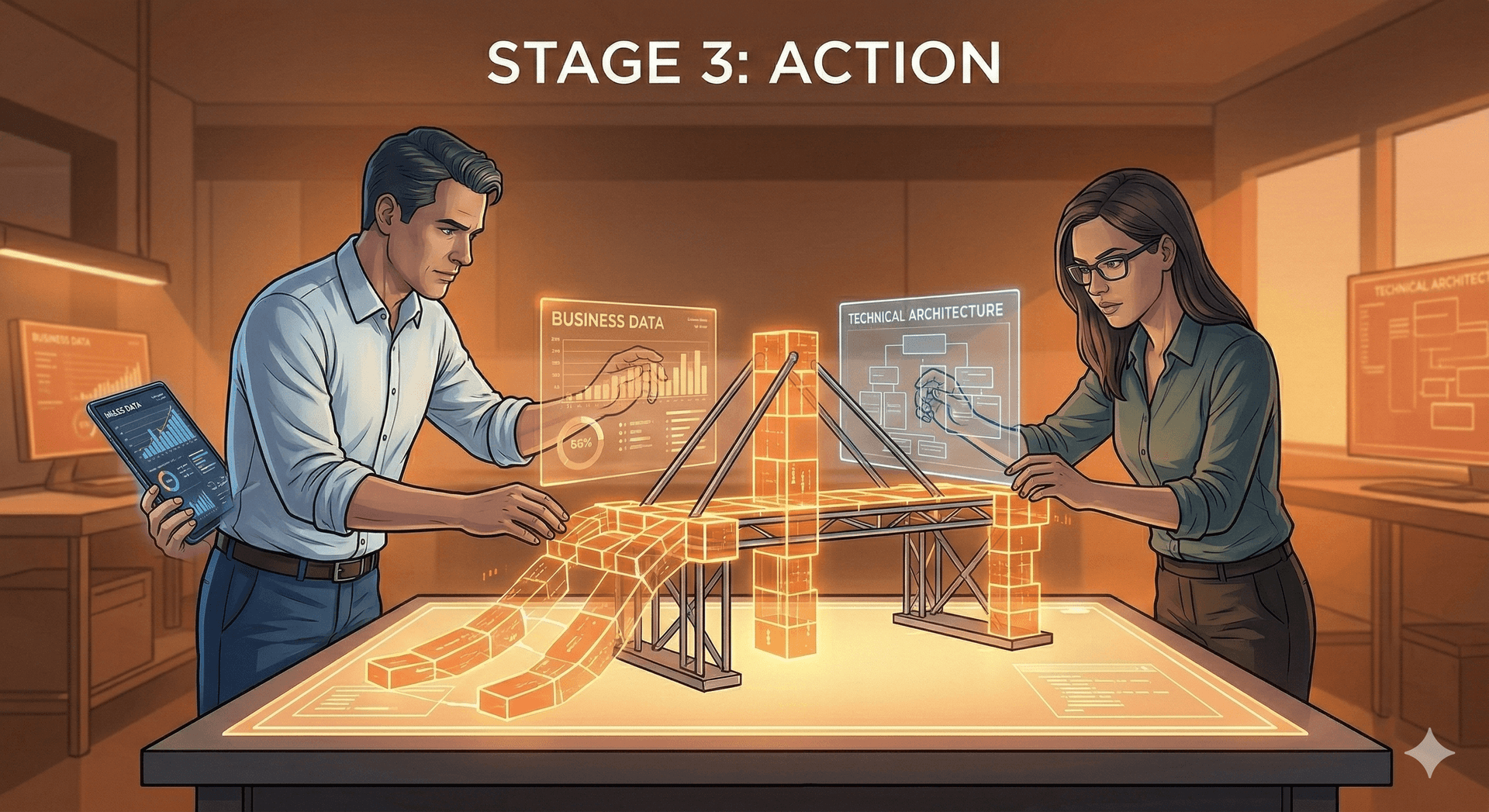
Actions: Where to Start
Start with the highest-impact items first. Not everything needs to happen at once.
Software Delivery
- Adopt a clear delivery process and track it consistently. In tools like Jira, make sure your workflow is relevant and systematically track: estimates vs. actuals, QA bounce rate (how often items come back), and tickets getting stuck (a sign of context-switching or poor upfront analysis).
- Conduct an external pen test at least annually, ideally every six months. Run internal pen tests at every release.
- Invest in automated testing — both functional and non-functional (e.g. performance testing).
- Use epics or tags to explicitly link every item to a business priority.
Product Delivery
- Adopt a clear ROI process — every project should pass through it before work begins.
- Maintain comprehensive release plans, and track actual vs. planned for every release.
- Track release time, rollbacks, and how long completed items sit unreleased — these are all indicators of delivery waste.
Sales Alignment
- Share upcoming release content with the sales team. Maintain a clear 2–3 month roadmap.
- When plans change, communicate quickly and transparently.
- Hold regular Product/Sales syncs to stay aligned.
- Discuss surrounding topics — pricing, customer growth, market shifts — to build a complete picture of what the business actually needs.
Overall Business
- Priorities will change. When they do, move decisively, follow the right process, and communicate changes broadly and clearly.
- Always explain to engineers why priorities have shifted. People accept hard decisions when they understand the business rationale and feel their contribution matters.
- Track waste in monetary terms — money resonates with everyone. Eliminating waste might fund an additional hire and relieve pressure on the existing team.
- Communicate with the engineering team often and in detail. People want to feel included and know they're contributing to something meaningful.
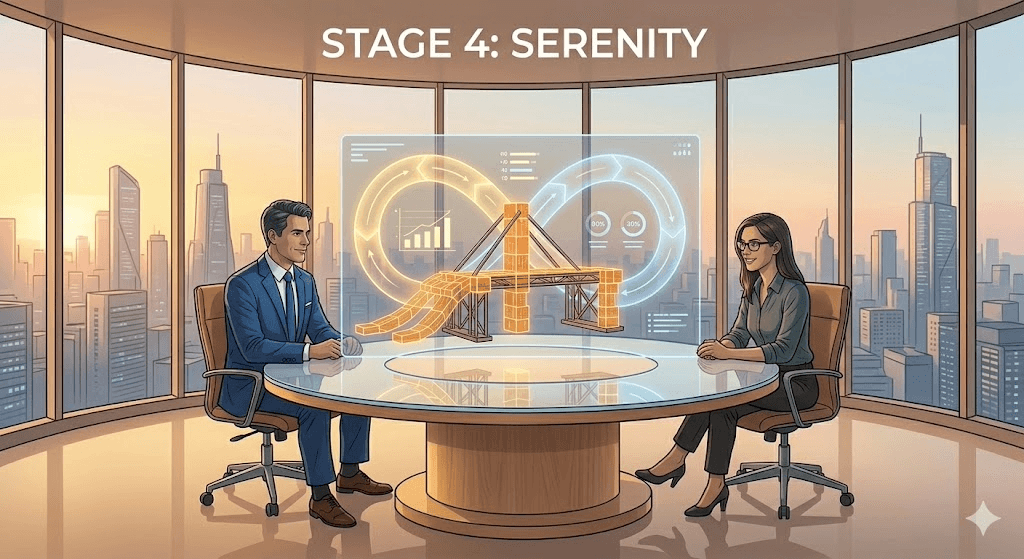
Serenity: What Good Looks Like
When you reach this stage, delivery feels almost easy. You can plan, execute on plan and on budget, and clearly articulate why every item is prioritised. Time opens up for longer-term strategic thinking and meaningful improvements.
One word of caution: don't relax the process once things are going well. Discipline is what got you here. Without it, things will unravel quickly.
"As a founder, having trust in the delivery and security of the technology has always been at the forefront of my mind. Balancing this with customer-focused decisions, timelines, and budget constraints is not an easy feat. Having confidence in the overall delivery process has enabled me to focus on business growth." — Client, SaaS Founder
If you want to discuss this in more detail and understand what it means for your business right now, click here to contact us.